

Laser tag has always had a good basic idea which is to give a group something to aim at, somewhere to take cover, and a reason to get a little competitive. It doesn’t take much explaining, and the arguments about who carried the team tend to last longer than the game.
VR takes that idea somewhere a physical arena can’t. The battlefield can become a digital landscape, the equipment can do things a plastic blaster never could, and your group can decide whether to compete against each other or take on a shared threat.
That’s what makes VR laser tag worth considering for your next outing. At HEROES VR Adventures in Roseville, games like Quantum Arena, Cyber Shock, and Tower Tag offer different versions of that experience. The right choice depends less on who’s the biggest gamer and more on what your group wants to do together.
What Changes When Laser Tag Goes Virtual
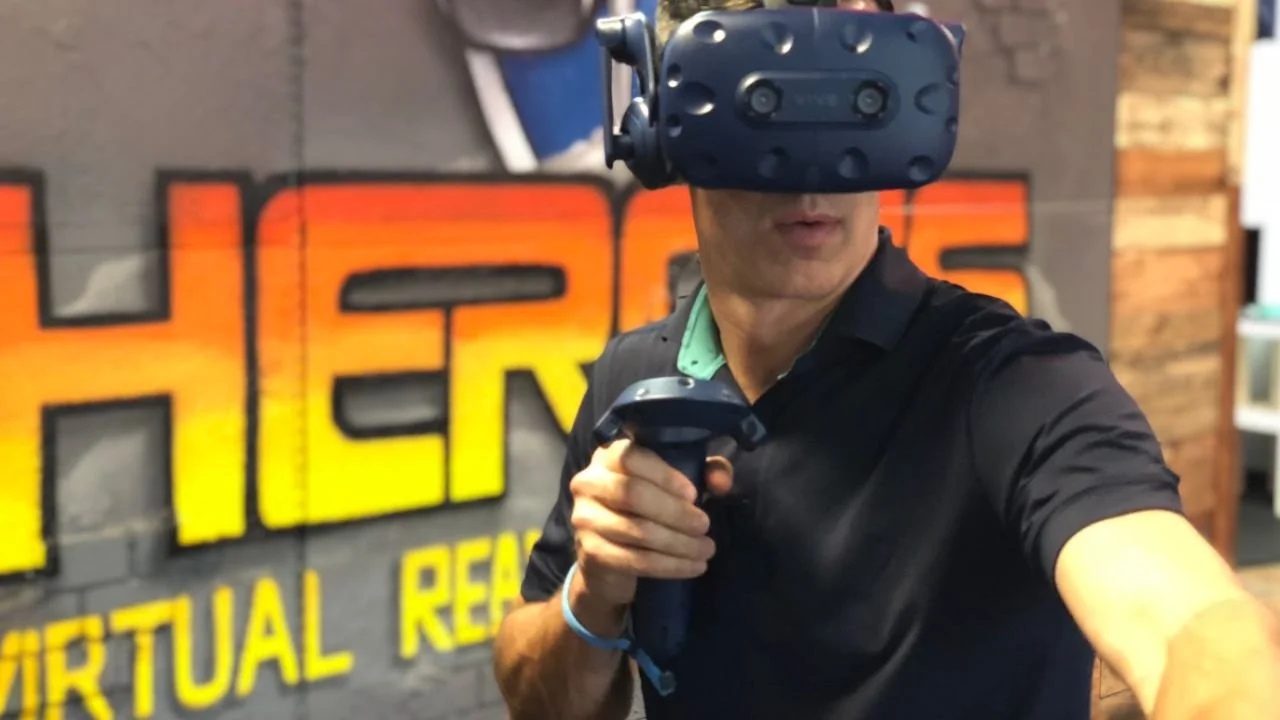
In traditional laser tag, the physical venue defines the battlefield. The walls, hiding spots, and routes are the space you’re working with.
In VR, the headset supplies the environment. You’re looking around a game world, using controllers to interact, and responding to action that surrounds you. The physical play area still has boundaries, but the setting no longer has to look like the room you’re standing in.
That opens up different kinds of play. You might want a competitive match where everyone is watching the score. You might prefer a cooperative shooter where the group faces the same enemies. Both deliver the aiming, movement, and quick decisions people associate with laser tag, but the social experience is different.
At HEROES, it helps to treat VR laser tag as a category of experiences rather than one game with one set of rules.
The Competitive Option: Quantum Arena
Quantum Arena is the one to consider when your group arrives with a little unfinished business.
It’s a Free Roam player-versus-player game built around a futuristic battlefield, with virtual blasters, shields, grenades, and teleportation. HEROES lists it for two to six players, with 15-minute rounds.
The game format is easy to understand. Your friends are the opposition, every round gives you another chance, and the game offers more to work with than simply pointing first. Cover and defensive choices matter alongside aim.
Picture the friend who confidently announces they’re going to win before anyone has put on a headset. Quantum Arena gives everyone else a way to test that prediction. For birthdays and friend groups, that friendly rivalry can become the whole point of the visit.
The rounds also provide a natural moment to compare what happened. Some people think their strategy was brilliant. Someone else has a different explanation. Either way, there’s a reason to want another go.
The Cooperative Option: Cyber Shock
Not every group wants to spend its outing trying to beat each other. Sometimes it’s more fun to have everyone facing the same problem.
Cyber Shock puts your squad inside a digital world, fighting waves of virus-like enemies with virtual blasters and shields. It’s a Free Roam cooperative shooter for two to six players, also listed in 15-minute rounds.
Instead of watching a friend’s score and hoping they miss, you’re hoping they handle whatever you haven’t noticed yet. The action gives the group something immediate to react to together.
For coworkers, families, or friends with different competitive streaks, that’s worth considering. A cooperative game offers a way to share the challenge without making one person’s victory everyone else’s loss. Cyber Shock is still fast and visually intense. Choosing cooperation doesn’t automatically mean choosing a quiet experience. It means the group is on the same side of the action.
A Different Format: Tower Tag
Tower Tag brings the laser-tag-style competition to Room Scale VR. Players battle across virtual platforms, use cover, and work to outmaneuver opponents. You occupy an individual physical play area while the game handles movement between its virtual towers. Free walking around a shared arena isn’t required.
VR laser tag can make it sound as though every option involves the same setup, but it doesn’t. HEROES offers competitive action through different formats, and the format changes how you move.
Tower Tag is worth knowing about if your group wants head-to-head play from separate stations. Its combination of aiming, cover, and positioning gives competitive players plenty to think about without needing everyone to share one physical floor.
Why the Group Dynamic Works
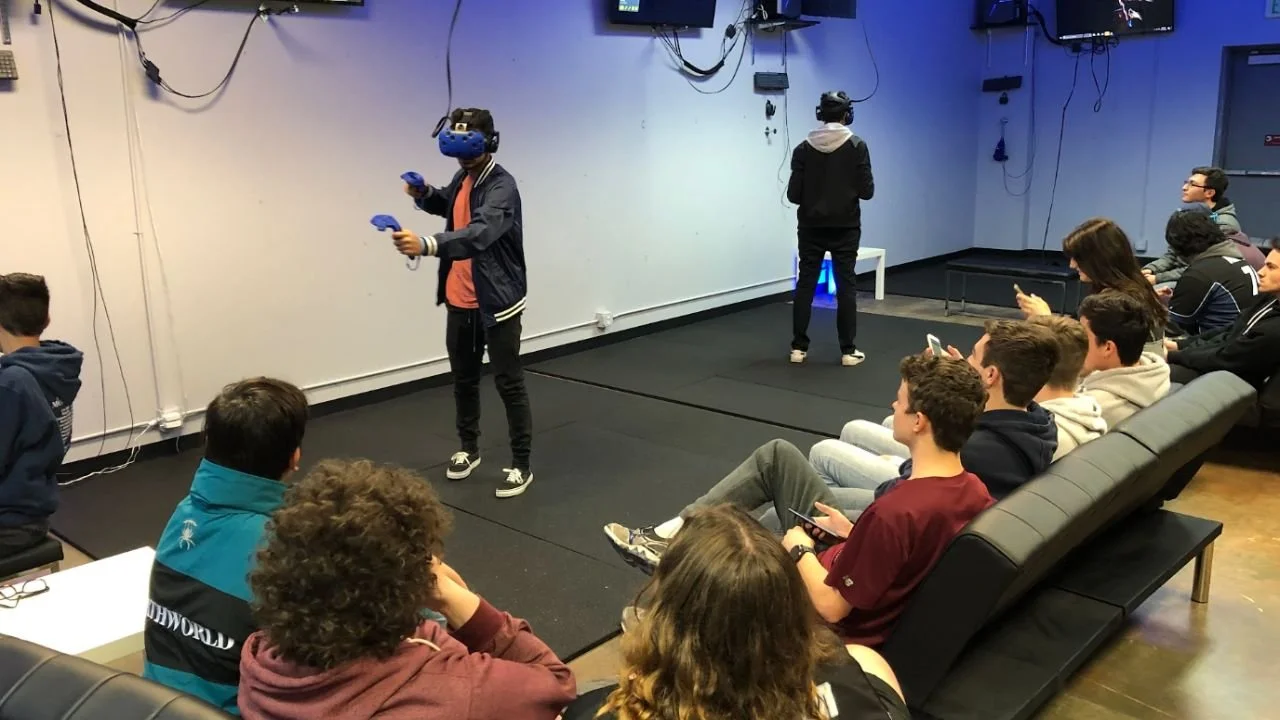
There’s a particular kind of outing where everyone attends, but people spend most of the time doing separate things. That can be perfectly enjoyable. It just produces a different evening from one built around a shared game.
A multiplayer VR session gives the group a common reference point. You know what everyone was reacting to because you were dealing with it too.
Imagine a coworker carefully explaining a plan, then getting distracted the moment the action starts. Or a quieter friend becoming the person who spots what everyone else missed. Those are possible moments, rather than promises about what a game will do, but they’re part of the appeal of trying something unfamiliar together.
Experienced gamers may settle in quickly but first-timers may need more time with the controls. What makes the visit work is finding a game and pace that give everyone a way into it.
The Staff Difference
HEROES provides VR guides who help guests with equipment, headset fit, and game selection. If someone hasn’t tried VR before, they don’t have to figure out the setup while the rest of the group waits.
For an organizer, that’s a practical benefit. Booking the outing shouldn’t also mean becoming the person responsible for explaining every controller button. Tell the staff what your group is actually like. Mention the first-timers, the youngest players, and whether everyone wants competition or cooperation. That’s more useful than simply requesting the most intense game available.
The goal is an experience people can get into together. A good recommendation starts with the people wearing the headsets.
Before You Book
A few details are worth sorting out before your group arrives. Before booking your slot, first, choose the experience rather than assuming all VR laser tag games have the same rules. Quantum Arena is competitive while Cyber Shock is cooperative. Tower Tag uses individual Room Scale stations.
Second, confirm age suitability for the specific title. HEROES describes Quantum Arena and Cyber Shock as best suited to ages ten through adult because of their pace or intensity, although their individual pages also list eight and up. Ask which option fits your youngest player before reserving. HEROES VR Adventures
Finally, distinguish a game’s round length from the reservation itself. A listed 15-minute round doesn’t tell you everything about the booking, equipment setup, or available play time.
For larger parties, ask how players will rotate. Knowing who plays together matters more than knowing how many people the building can accommodate.
Finding VR Laser Tag Near Me
If you’ve been searching for “VR laser tag near me” around Sacramento, HEROES VR Adventures is at 1801 Taylor Road, Suite 130, Roseville, CA 95661.
Browse the current games at heroesvradventures.com, then reserve the format that matches your group. Walk-ins are welcome when space allows, but booking ahead makes sense when several people are planning around the same visit. HEROES VR Adventures
Bring the friends who always want a rematch, the coworker who’s curious about VR, or the family members ready to try something different. The virtual battlefield is the setting. What happens between your group is what makes it an outing.
FAQs
Q1: What VR laser tag games can we try at HEROES?
Quantum Arena offers competitive Free Roam battles, Cyber Shock offers cooperative Free Roam shooting, and Tower Tag brings laser-tag-style competition to individual Room Scale stations.
Q2: Can our group play together?
Yes, subject to the selected game’s player limit. Quantum Arena and Cyber Shock each list two to six players. Confirm arrangements for larger groups when booking.
Q3: Do we need previous VR experience?
No. Staff help with equipment and controls. Let them know who’s new so they can recommend a suitable starting experience.
Q4: Is every game competitive?
No. Quantum Arena and Tower Tag involve playing against opponents. Cyber Shock puts the group together against shared enemies.
Q5: What should we wear?
Comfortable clothing and closed-toe shoes are a sensible choice. Avoid accessories that interfere with headset fit, and follow the movement instructions provided before playing.
